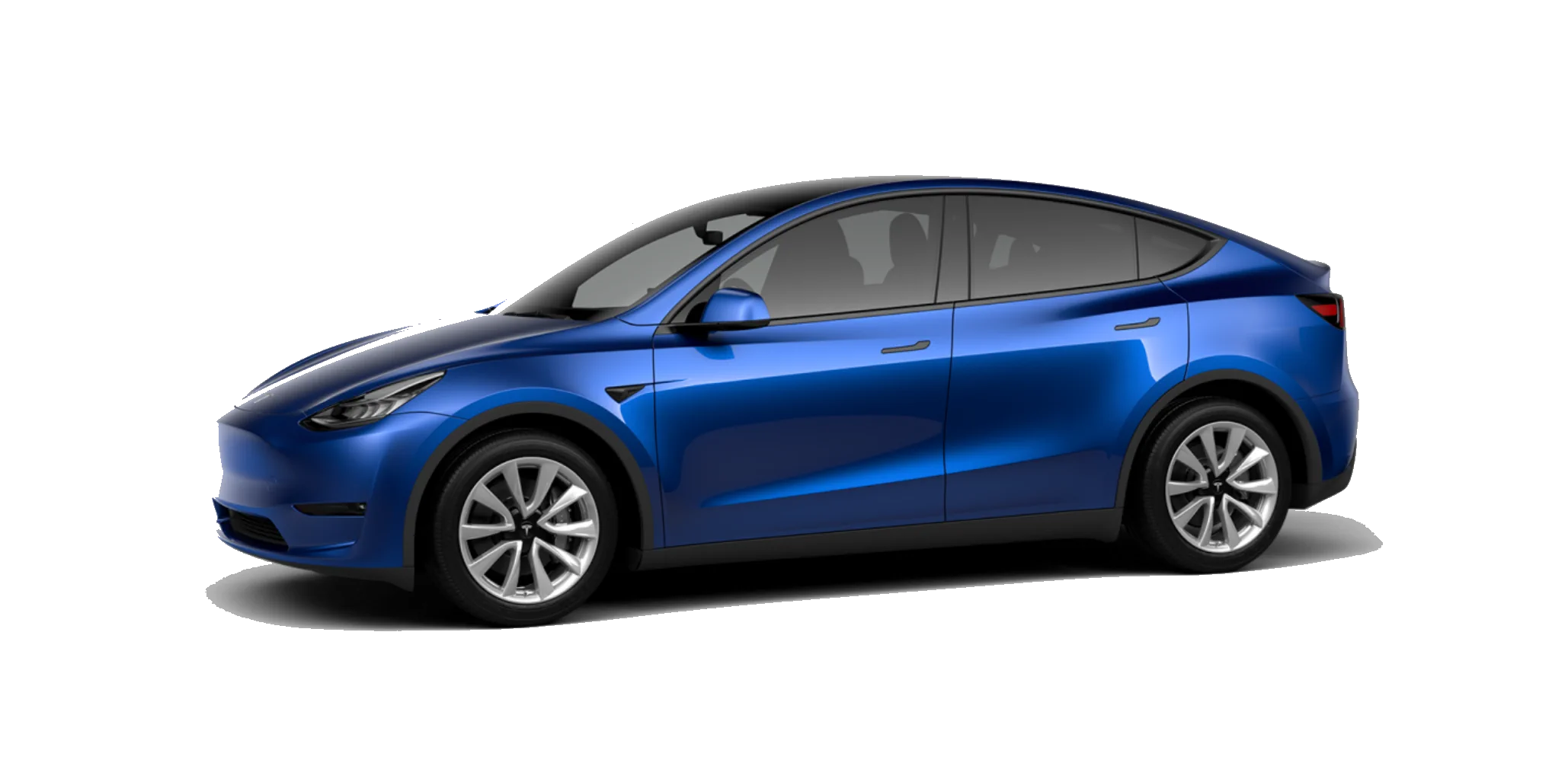
February 2, 2022 NHTSA CAMPAIGN NUMBER: 22V050000
Windshield May Not Defrost Properly/FMVSS 103
Decreased defrosting performance may reduce the driver’s visibility, increasing the risk of a crash.
NHTSA Campaign Number: 22V050
Manufacturer Tesla , Inc.
Components VISIBILITY, ELECTRICAL SYSTEM
Potential Number of Units Affected 26,681
Summary
Tesla, Inc. (Tesla) is recalling certain 2021-2022 Model 3, Model S, Model X, and 2020-2022 Model Y vehicles. A software error may cause a valve in the heat pump to open unintentionally and trap the refrigerant inside the evaporator, resulting in decreased defrosting performance. As such, these vehicles fail to comply with the requirements of Federal Motor Vehicle Safety Standard number 103, “Windshield Defrosting and Defogging Systems.”
Remedy
Tesla will perform an over-the-air (OTA) software update, free of charge. Owner notification letters were mailed April 1, 2022. Owners may contact Tesla customer service at 1-877-798-3752. Tesla’s number for this recall is SB-22-18-002.
Notes
Owners may also contact the National Highway Traffic Safety Administration Vehicle Safety Hotline at 1-888-327-4236 (TTY 1-800-424-9153), or go to www.nhtsa.gov.
Check if your Tesla has a Recall
Condition
Due to an unintended opening of the expansion valve (EXV), certain vehicles equipped with heat pump and operating firmware release 2021.44 through 2021.44.30.6 may, in certain conditions, experience limited or unavailable defrost performance as part of cabin heating loss.
NOTE: This bulletin also covers certain vehicles equipped with heat pump that were operating firmware releases 2021.44 through 2021.44.30.6 at the time of customer delivery.
Correction
Inspect the firmware version installed in the vehicle, and if necessary, update to version 2021.44.30.7 or later.
Procedure
1. On the vehicle touchscreen, touch Controls (vehicle icon) > Software, and then scroll down to display the vehicle firmware
- If the vehicle is operating with firmware version 2021.44.30.7 or a newer release, then no further action is Use correction code S012218002.
- If the vehicle is operating with a firmware version before 2021.44.30.7, then update to the latest available firmware Use correction code S022218002.
Chronology :
– On or about December 10, 2021, Tesla began deploying firmware release 2021.44 and subsequent releases through firmware release 2021.44.30.6 to affected vehicles being prepared at delivery centers prior to delivery to customers, as well as to delivered vehicles.
– Later in December 2021, Tesla began receiving complaints from customers who brought their vehicles into Tesla Service for loss of heating performance in extreme cold weather conditions. An investigation into potential root cause commenced.
– On January 11, 2022, the lack of a software command to close the EXV after communication interruptions in firmware release 2021.44 through 2021.44.30.6 was identified as potential cause for further assessment.
– On January 15, 2022, as a precautionary measure, firmware release 2021.44.30.7 and later releases reintroduced a software command to close the EXV.
– From January 21 through January 26, 2022, following discussions with NHTSA’s Office of Vehicle Safety Compliance and Transport Canada to review recent consumer complaints that alleged similar loss of heating performance, tests were conducted to assess the compliance of new vehicles delivered with the software command found in firmware release 2021.44 through 2021.44.30.6 to FMVSS 103.
– Results of the compliance tests showed that new vehicles delivered with firmware release 2021.44 through 2021.44.30.6 were potentially noncompliant in worst-case scenario conditions.
– On January 26, 2022, having confirmed the root cause and completed the compliance assessment, a recall determination was made.
– On February 7, 2022, the affected vehicle population was expanded out of an abundance of caution to incorporate vehicles currently operating firmware release 2021.44 through 2021.44.30.6 that have yet to install available firmware release 2021.44.30.7 or a later release.
9 Affected Products
Vehicles
8 Associated Documents
Recall 573 Report-Amendment 1 02/07/2022
RCLRPT-22V050-2023.PDF 217.7KB
Recall 573 Report-Amendment 2 02/07/2022
RCLRPT-22V050-5142.PDF 217.68KB
Recall Acknowledgement
RCAK-22V050-1936.pdf 645.279KB
Noncompliance Notice 573 Report
RCLRPT-22V050-2760.PDF 217.498KB
Remedy Instructions and TSB
RCRIT-22V050-3360.pdf 78.856KB
Owner Notification Letter(Part 577)
RCONL-22V050-9970.pdf 72.241KB
Recall Quarterly Report #2, 2022-3
RCLQRT-22V050-7313.PDF 211.239KB
Recall Quarterly Report #3, 2022-4
RCLQRT-22V050-0175.PDF 211.327KB
Latest Recalls Documents
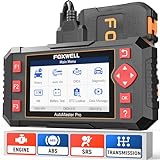
- [Easy to Use—Work Out of the Box] + [FOXWELL 2026 New Version] FOXWELL NT604 Elite scan tool is the 2026 new version from FOXWELL, designed for car owners who want to figure out the cause of issues before fixing car problems by scanning common systems like ABS, SRS, engine, and transmission. The NT604 Elite obd2 scanner diagnostic tool comes with the latest software—no need to waste time downloading software first. Plug the scanner into the OBDII port with OBDII cable to start the diagnosis.
- [Affordable] + [Reliable Car Health Monitor] Will you be confused what happens when the warning light of ABS/SRS/transmission/check engine flashes? Instead of taking your cars to dealership, this FOXWELL scanner will help you do a thorough scanning and detection for your cars and pinpoint the root cause. Note:The device is a diagnostic tool, not a repair tool. To turn off a warning light, you must first physically repair the issue causing it. Only then can the scanner be used to clear the corresponding fault code.
- [5 in 1 Car Diagnostic Scanner] Compared with obd scanners (50-100), NT604 Elite code scanner not only includes their OBDII diagnosis but also serves as ABS/SRS scanner, transmission and check engine code reader. When it’s an odb2 scanner, you can use it to check if your car is ready for annual test through I/M readiness menu. In addition, live data stream, built-in DTC library, data play back and print, all these features are a big plus for it. Note: doesn't support maintenance functions like reset or relearn. For the SRS system, NT604 Elite can read and clear common fault codes not caused by a crash, but crash/collision data cannot be cleared.
- [Fantastic AUTOVIN] + [No extra software fee] Through the AUTOVIN menu, this NT604 Elite car scanner allows you to get your V-IN and vehicle info rapidly, no need to take time to find your V-IN and input one by one. What's more, the NT604 Elite ABS SRS scanner supports 60+ car brands from worldwide (America/Asia/Europe). You don’t need to pay extra software fee. AUTOVIN may not work on some older vehicles or certain vehicle brands. If AUTOVIN fails, please input the vin code manually or go to the Diagnostic Menu to select your vehicle model.
- [Solid protective case KO plastic carrying bag] + [Lifetime update] Almost all same price-level car scanner diagnostic tool only offers plastic bag to hold the scanner.However, NT604 Elite automotive scanner is equipped with solid protective case, preventing your obd2 scanner from damage. Then you don’t need to pay extra money to buy a solid toolbox.
- OBD2 SCANNER FOR ALL SYSTEMS – The INNOVA SD35 is a tablet-based OBD2 scanner designed for advanced diagnostics. Read and clear check engine light, ABS, SRS, and TPMS codes, plus test your car battery and alternator to prevent unexpected failures. Vehicle coverage may vary. Please use Innova’s Coverage Checker to verify compatibility.
- ALL-SYSTEM DIAGNOSTICS & LIVE DATA – Unlike basic code readers, this OBD2 scanner for all vehicles scans engine, transmission, ABS, SRS, and more. Get real-time live data, including RPM, fuel trims, temperature readings, and oxygen sensor performance.
- OBD2 TABLET WITH USER-FRIENDLY INTERFACE – This automotive scan tool features a high-resolution display, making vehicle diagnostics faster and easier.
- ADVANCED TPMS, OIL RESET & SERVICE FUNCTIONS – Perform TPMS sensor checks, oil light reset, and other service resets with ease This professional diagnostic tool provides comprehensive vehicle maintenance capabilities in one device.
- WIDE VEHICLE COVERAGE (1996 & NEWER CARS & TRUCKS) – This OBD2 scanner Bluetooth tablet is compatible with Toyota, Ford, Honda, Chevrolet, Nissan, Dodge, and more. However, feature coverage may vary. Please use Innova's Coverage Checker to verify coverage.

- 【Reset ABS/SRS/Transmission/Engine Lights】 More than an check engine code reader, OBDMATE OM901 obd2 scanner performs comprehensive diagnostics for the 4 most-used systems (ABS/SRS/Engine/Transmission). It quickly clears fault codes, turns off warning lights, read data stream and auto VIN.
- 【3.5" Handheld Scanner with 4 System Diagnose】 3.5" Super large TFT screen equipped displays an intuitive menu and clear readings of various sensors from ABS, SRS, ECM and TCM systems. It arrived with a silicone protective case and hard-shell carrying case, ensuring long-lived durability and drop resistance. The car diagnostic tool is plug-to-play designed, plug it and get diagnosis started without any batteries or updates required.
- 【One-Click I/M Readines&Full OBD2 Functions】 Press F1 to get an intuitive corloured form about whether various emissions-related systems on the vehicle are operating properly. Help you get smog-check ready quickly. OM901 car scanner supports all essential OBD2 functions you need: read & clear codes, view freeze frame, read I/M readiness, retrieve VIN, live data stream (with graphing display), O2 sensor test, onboard monitoring mode, and EVAP leak test.
- 【Battery Voltage Check&DLC Pin Test】 It allows you to monitor battery health by testing current battery voltage. Plus, this obd2 diagnostic tool features DLC 16-PIN test to check current voltage of every pin.
- 【Automotive Scanner Diagnostic Kit】 The package comes with 1 car scanner, 1 USB-type c cable, 1 hard storage bag and 1 user manual(en). Free to update without any hidden fees. 5 languanges available in setting including English, French, Italian, German and Espanish. Valuable and Portable, making it a great tool kit for car owners, DIY enthusiasts, and professional mechanics.
- [All System Diagnostics, Professional-Level Scanner] - BLCKTEC 460T is the ultimate OBD2 diagnostic tool for home mechanics and professionals. It supports all 10 OBD2 modes, reads and clears Engine/Transmission/ABS/SRS codes, performs All-System Diagnostics, offers workshop reset tools, and provides real-time live data. It helps you pinpoint issues, assess your car's condition, and prepare for SMOG checks with ease. NOTE: Function availability depends on your vehicle. Before you buy, be sure to use the Compatibility Checker on BLCKTEC website or contact our customer support to verify that the features you need are supported for your vehicle’s specific year, make, and model.
- [12+ Most Popular Reset Functions] - BLCKTEC 460T OBD2 scanner offers 12+ dealer-level service functions, including Oil Maintenance Reset, ABS Bleeding, EPB Reset, SAS(Steering Angle Sensor) Recalibration, DPF(Diesel Particulate Filter) Reset, Throttle Body Relearn, Battery Reset/Initialization, TPMS Relearn, Transmission Reset, Fluid Change Reset, Maintenance Reset and more, enabling you to perform workshop services like a pro. NOTE: Function availability depends on your vehicle. Be sure to use the Compatibility Checker on BLCKTEC website to verify that the features you need are supported for your vehicle.
- [Real-Time OBD2 and OEM Live Data, Freeze Frame Data] - BLCKTEC 460T helps diagnose vehicle issues when warning lights like Check Engine Light or ABS/SRS Light appear. It offers detailed DTC info, ECU Freeze Frame Data, and real-time OBD2 and advanced OEM live data, including Engine, Transmission, ABS, SRS, and more, making it easy to diagnose and resolve vehicle problems. You can view, graph, record, replay, and overlay up to four live data streams in a single graph for better analysis.
- [AutoVIN, AutoReLink, AutoScan, 3X Faster] - Equipped with AutoVIN technology, 460T automatically retrieves the VIN to save you time. Its AutoScan and AutoReLink features scan all of the vehicle's ECUs and detect any fault codes immediately after you plug the scanner into the vehicle's OBD2 port - no button presses required. Additionally, it regathers DTC and I/M readiness information every 30 seconds, simplifying monitor tests. 460T's advanced technology makes it 3X faster than other products.
- [Get RepairSolutions2, the #1 Auto Repair App for Free] - When paired with RepairSolutions2(RS2) App, 460T becomes even more powerful. RS2's Verified Fix Database built by master technicians, provides the parts needed for the repair. Additionally, RS2 gives you access to OEM warranty info, maintenance schedules, TSB, and dealership recall info, making car care easier than ever. RS2 is free with no subscription fees and it stores your car scan reports in the cloud, allowing you to access, share, or print them anytime and anywhere.
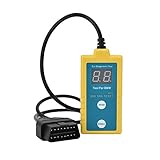
- ✔️【Professional SRS Reset for 1994-2003 BMW】 Designed specifically for classic BMW models (1994-2003). This B800 scanner reads & clears SRS airbag fault codes, turns off the warning light, and saves you a costly dealer visit. Confirmed compatible with: E36, E46 (EXCEPT 2001 330i), E34, E38, E39, Z3, and X5 (E53). NOT compatible with any BMW built before 1994 or after 2003.
- ✔️【Important: Two Different Connection Ports – Read Before Use】 To avoid “not working” issues, please note: For 1994–2000 BMWs (most E36, E34, Z3, early E39), the SRS diagnostic port is a round 20-pin connector under the hood. You MUST use the included 16-pin to 20-pin adapter cable. For 2000–2003 models (late E46, E39, X5), use the standard OBD-II port inside the cabin. Incorrect connection is the #1 reason for “incompatibility” reports.
- ✔️【Read & Clear Fault Codes in Minutes】 Quickly diagnose why your SRS light is on. The scanner accurately reads fault codes from airbag and seatbelt pretensioner systems. With one button press, clear the codes and reset the SRS warning light in seconds. No expensive dealer tools needed.
- ✔️【User-Friendly for DIYers – No Mechanic Required】 Easy operation with an intuitive button layout: ‘Enter’ to confirm, ‘Scroll’ to navigate. The clear LCD screen shows results instantly. Includes a step-by-step manual (revised for clarity) to guide you through the entire reset process.
- ✔️【Reliable Support with 1-Year Warranty】 We stand behind the quality of our B800 scanner. It comes with a 1-Year Hassle-Free Warranty. If you have any questions or need support, please contact us with your Order ID, and our dedicated team will assist you promptly.
SEOCONTENT-START
SB-22-18-002 Page 1 of 1 For feedback on the accuracy of this document, email ServiceBulletinFeedback@tesla.com Tesla, Inc. Service Bulletin Update Vehicle Firmware to Correct EXV Operation SB-22-18-002 February 15, 2022 Classification Section/Group Mobile Service Configuration Recall Bulletin 18 – Thermal Management Can Perform (where permitted) Heat Pump Model Year Model Country/Region Build Location 2020 – 2022 Model 3, Model Y, Model S Palladium, Model X Palladium All All The model(s) and model year(s) listed are a general approximation of the affected VIN list. Refer to the VIN/Bulletin Tracker or Customer/Vehicle profile to determine applicability of this bulletin for a particular vehicle. Recall Bulletin: Recall Bulletins are mandatory service procedures that must be carried out by Tesla-certified Service Centers. Recall work performed by uncertified technicians could lead to unsafe conditions or voided warranty provisions. Condition Due to an unintended opening of the expansion valve (EXV), certain vehicles equipped with heat pump and operating firmware release 2021.44 through 2021.44.30.6 may, in certain conditions, experience limited or unavailable defrost performance as part of cabin heating loss. NOTE: This bulletin also covers certain vehicles equipped with heat pump that were operating firmware releases 2021.44 through 2021.44.30.6 at the time of customer delivery. Correction Inspect the firmware version installed in the vehicle, and if necessary, update to version 2021.44.30.7 or later. Correction Description Correction Time Inspect Vehicle Firmware Version, No Update Necessary S012218002 0.05 Inspect And Update Vehicle Firmware To Correct EXV Operation S022218002 0.05 Procedure 1. On the vehicle touchscreen, touch Controls (vehicle icon) > Software, and then scroll down to display the vehicle firmware version. • If the vehicle is operating with firmware version 2021.44.30.7 or a newer release, then no further action is necessary. Use correction code S012218002. • If the vehicle is operating with a firmware version before 2021.44.30.7, then update to the latest available firmware release. Use correction code S022218002.
**************************************************************************************************************
1 Tesla Road Austin, TX 78725 IMPORTANT SAFETY RECALL <Date> <Name> <Address> <Address 2> (if applicable; if not, remove this line) <City, State, ZIP> This notice applies to your vehicle, <VIN> NHTSA Recall No: 22V-050 Dear Tesla Owner, This notice is sent to you in accordance with the National Traffic and Motor Vehicle Safety Act. Tesla, Inc. has decided that certain Model Year (“MY”) 2021-2022 Model S, Model X, Model 3 and MY 2020-2022 Model Y vehicles fail to conform to Federal Motor Vehicle Safety Standard (“FMVSS”) No. 103 “Defrosting and Defogging Systems.” Our records show that you are the owner of a vehicle affected by this action. REASON FOR THIS RECALL Vehicles operating a firmware release 2021.44 through 2021.44.30.6 may experience loss of cabin heating, particularly in temperatures –10 C or colder, due to due to a software command found in above firmware releases. With the condition present, windshield defrost performance may be reduced and may not fully comply with FMVSS 103. Windshield defrost performance that does not fully comply with FMVSS 103 may cause reduced windshield visibility, which may increase the risk of a crash. WHAT TESLA WILL DO Tesla remedied the noncompliance with a free over-the-air (“OTA”) software update that corrects the software error. WHAT YOU SHOULD DO Please check that your vehicle is running software version 2021.44.30.7 or a later release, all of which correct the software error. You can check the software version running on your vehicle by tapping ‘Controls’ then ‘Software’ on your touchscreen. If your vehicle is running software version 2021.44.30.7 or a later release, then there is no further action that you need to take, and you may disregard this notice. If your vehicle is not running one of these software versions, then please install the latest pending software update through your Tesla app, or by tapping the yellow clock icon on your vehicle’s touchscreen and following the prompts. If you believe that Tesla has failed or is unable to remedy this defect without charge or within a reasonable time, you may submit a complaint to the Administrator, National Highway Traffic Safety Administration, 1200 New Jersey Avenue SE, Washington, DC 20590, by calling 1-888-327-4236 (TTY: 1-800-424-9153), or by visiting www.safercar.gov. Federal law requires any lessor who receives a notification of a noncompliance or safety-related defect determination pertaining to any leased motor vehicle to send the notice to the lessee within 10 days. If you no longer own the vehicle, update vehicle ownership in your Tesla Account. For more details on adding or removing vehicles from your Tesla Account, visit www.tesla.com/support/account-support#add-remove-products. If you have any questions or need assistance installing the software update, please contact Tesla online by visiting www.tesla.com/support/contact or by calling 1-877-79-TESLA (1-877-798-3752). Thank you for being a Tesla customer. We are committed to ensuring that your vehicle provides the highest possible level of safety. TESLA, INC.
**************************************************************************************************************
OMB Control No.: 2127-0004 Part 573 Safety Recall Report 22V-050 The information contained in this report was submitted pursuant to 49 CFR §573 Manufacturer Name : Tesla, Inc. Submission Date : FEB 07, 2022 NHTSA Recall No. : 22V-050 Manufacturer Recall No. : SB-22-18-002 Manufacturer Information : Manufacturer Name : Tesla, Inc. Address : 13101 Tesla Road Austin TX 78725 Company phone : 6506815000 Population : Number of potentially involved : 26,681 Estimated percentage with defect : 1 % Vehicle Information : Vehicle 1 : 2021-2022 Tesla Model S Vehicle Type : Body Style : Power Train : NR Descriptive Information : The recall population includes certain new Model Year (“MY”) 2021-22 Model 3, Model S and Model X and certain MY 2020-22 Model Y vehicles built with heat pump and operating firmware release 2021.44 through 2021.44.30.6 or were operating one of these firmware releases at the time of customer delivery, based on a review of manufacturing and firmware release records. Production Dates : FEB 04, 2021 – JAN 12, 2022 VIN Range 1 : Begin : NR End : NR Not sequential Vehicle 2 : 2021-2022 Tesla Model X Vehicle Type : Body Style : Power Train : NR Descriptive Information : The recall population includes certain new Model Year (“MY”) 2021-22 Model 3, Model S and Model X and certain MY 2020-22 Model Y vehicles built with heat pump and operating firmware release 2021.44 through 2021.44.30.6 or were operating one of these firmware releases at the time of customer delivery, based on a review of manufacturing and firmware release records. Production Dates : FEB 16, 2021 – JAN 11, 2022 VIN Range 1 : Begin : NR End : NR Not sequential Part 573 Safety Recall Report 22V-050 Page 2 The information contained in this report was submitted pursuant to 49 CFR §573 Vehicle 3 : 2021-2022 Tesla Model 3 Vehicle Type : Body Style : Power Train : NR Descriptive Information : The recall population includes certain new Model Year (“MY”) 2021-22 Model 3, Model S and Model X and certain MY 2020-22 Model Y vehicles built with heat pump and operating firmware release 2021.44 through 2021.44.30.6 or were operating one of these firmware releases at the time of customer delivery, based on a review of manufacturing and firmware release records. Production Dates : SEP 24, 2020 – JAN 12, 2022 VIN Range 1 : Begin : NR End : NR Not sequential Vehicle 4 : 2020-2022 Tesla Model Y Vehicle Type : Body Style : Power Train : NR Descriptive Information : The recall population includes certain new Model Year (“MY”) 2021-22 Model 3, Model S and Model X and certain MY 2020-22 Model Y vehicles built with heat pump and operating firmware release 2021.44 through 2021.44.30.6 or were operating one of these firmware releases at the time of customer delivery, based on a review of manufacturing and firmware release records. Production Dates : NOV 26, 2019 – JAN 13, 2022 VIN Range 1 : Begin : NR End : NR Not sequential Description of Noncompliance : Description of the Noncompliance : FMVSS 103, S4.2, by incorporation, requires 80% minimum defrost of critical area C at 20 minutes. A software command found in firmware release 2021.44 through 2021.44.30.6 may prevent vehicles delivered with one of the firmware releases from complying with this requirement in certain conditions. FMVSS 1 : 103 – Windshield defrosting and defogging systems FMVSS 2 : NR Description of the Safety Risk : Windshield defrost performance that does not fully comply with FMVSS 103 may cause reduced windshield visibility in certain conditions, which may increase the risk of a collision. Tesla is not aware of any crashes, injuries or fatalities related to this condition. Description of the Cause : In vehicles built with heat pump, the Electronic Expansion Valve (EXV) may experience controller communication interruptions, after which the EXV driver may attempt to realign the EXV rotor by rotating it in a small increment toward the open direction. When heat pump vehicles operating firmware release 2021.44 through 2021.44.30.6 experience such interruptions, the vehicle software does not close the valve, and the accumulation of interruptions and subsequent realignments over extended periods where the vehicle is awake Part 573 Safety Recall Report 22V-050 Page 3 The information contained in this report was submitted pursuant to 49 CFR §573 may result in an unintended valve opening event. This, in turn, may trap refrigerant inside the evaporator and may deplete the refrigerant from the active components in the system. The depletion may result in fail-safe compressor stoppage, and cause loss of cabin heating, particularly in temperatures –10 C or colder. While the windshield defrost system continues to operate with the condition present, defrost performance may not fully comply with FMVSS 103. Identification of Any Warning that can Occur : With the condition present, the customer receives an alert on the user interface, alerting them to the cabin heating, ventilation, and air-conditioning (“HVAC”) system’s performance being limited or unavailable. In addition, the blower motor in the HVAC system remains operational, which, when active, may slow fog or frost accumulation on the windshield and provide the customer with both visual warning and time to take additional actions. Involved Components : Component Name 1 : Vehicle FW Release 2021.44 through 2021.44.30.6 Component Description : NR Component Part Number : NR Supplier Identification : Component Manufacturer Name : Tesla, Inc. Address : 13101 Tesla Road Austin Texas 78725 Country : United States Chronology : – On or about December 10, 2021, Tesla began deploying firmware release 2021.44 and subsequent releases through firmware release 2021.44.30.6 to affected vehicles being prepared at delivery centers prior to delivery to customers, as well as to delivered vehicles. – Later in December 2021, Tesla began receiving complaints from customers who brought their vehicles into Tesla Service for loss of heating performance in extreme cold weather conditions. An investigation into potential root cause commenced. – On January 11, 2022, the lack of a software command to close the EXV after communication interruptions in Part 573 Safety Recall Report 22V-050 Page 4 The information contained in this report was submitted pursuant to 49 CFR §573 firmware release 2021.44 through 2021.44.30.6 was identified as potential cause for further assessment. – On January 15, 2022, as a precautionary measure, firmware release 2021.44.30.7 and later releases reintroduced a software command to close the EXV. – From January 21 through January 26, 2022, following discussions with NHTSA’s Office of Vehicle Safety Compliance and Transport Canada to review recent consumer complaints that alleged similar loss of heating performance, tests were conducted to assess the compliance of new vehicles delivered with the software command found in firmware release 2021.44 through 2021.44.30.6 to FMVSS 103. – Results of the compliance tests showed that new vehicles delivered with firmware release 2021.44 through 2021.44.30.6 were potentially noncompliant in worst-case scenario conditions. – On January 26, 2022, having confirmed the root cause and completed the compliance assessment, a recall determination was made. – On February 7, 2022, the affected vehicle population was expanded out of an abundance of caution to incorporate vehicles currently operating firmware release 2021.44 through 2021.44.30.6 that have yet to install available firmware release 2021.44.30.7 or a later release. Description of Remedy : Description of Remedy Program : Firmware release 2021.44.30.7 and later releases remedy the condition by reintroducing a software command to close the EXV, thereby preventing refrigerant from entering the evaporator. No further action is necessary from owners whose vehicles are equipped with firmware release 2021.44.30.7 or a later release. Tesla does not plan to include a statement in the Part 577 owner notification about reimbursement for pre-notice repairs to owners since all of the affected vehicles remain covered under the new vehicle warranty, and owners will receive the remedy free of charge with an OTA firmware release. How Remedy Component Differs from Recalled Component : Firmware release 2021.44 through 2021.44.30.6 do not close the EXV after communication interruptions, which may indirectly create noncompliant performance with FMVSS 103, whereas firmware release 2021.44.30.7 and later releases contain a software command to close the EXV, which corrects the potential noncompliance with FMVSS 103. Identify How/When Recall Condition was Corrected in Production : The condition was not introduced in production because firmware releases used in production maintained the EXV closure logic reflected in firmware release 2021.44.30.7 and later releases. Tesla deployed firmware release 2021.44 and subsequent releases through firmware release 2021.44.30.6 to affected vehicles when they were being prepared at delivery centers prior to delivery to customers, as well as to delivered vehicles. Part 573 Safety Recall Report 22V-050 Page 5 The information contained in this report was submitted pursuant to 49 CFR §573 Recall Schedule : Description of Recall Schedule : All Tesla stores and service centers will be notified on or shortly after February 4, 2022. Owner notification letters will be mailed in accordance with 49 C.F.R. § 577.7. Planned Dealer Notification Date : FEB 04, 2022 – FEB 04, 2022 Planned Owner Notification Date : APR 01, 2022 – APR 01, 2022 * NR – Not Reported
**************************************************************************************************************
OMB Control No.: 2127-0004 Part 573 Safety Recall Report 22V-050 The information contained in this report was submitted pursuant to 49 CFR §573 Manufacturer Name : Tesla, Inc. Submission Date : FEB 02, 2022 NHTSA Recall No. : 22V-050 Manufacturer Recall No. : SB-22-18-002 Manufacturer Information : Manufacturer Name : Tesla, Inc. Address : 13101 Tesla Road Austin TX 78725 Company phone : 6506815000 Population : Number of potentially involved : 16,275 Estimated percentage with defect : 1 % Vehicle Information : Vehicle 1 : 2021-2022 Tesla Model X Vehicle Type : Body Style : Power Train : NR Descriptive Information : The recall population includes certain new Model Year (“MY”) 2021-22 Model 3, Model Y, Model S and Model X vehicles built with heat pump and running firmware release 2021.44 through 2021.44.30.6 at the time of customer delivery, based on a review of manufacturing and firmware release records. Production Dates : OCT 31, 2021 – JAN 11, 2022 VIN Range 1 : Begin : NR End : NR Not sequential Vehicle 2 : 2021-2022 Tesla Model 3 Vehicle Type : Body Style : Power Train : NR Descriptive Information : The recall population includes certain new Model Year (“MY”) 2021-22 Model 3, Model Y, Model S and Model X vehicles built with heat pump and running firmware release 2021.44 through 2021.44.30.6 at the time of customer delivery, based on a review of manufacturing and firmware release records. Production Dates : FEB 13, 2021 – JAN 12, 2022 VIN Range 1 : Begin : NR End : NR Not sequential Part 573 Safety Recall Report 22V-050 Page 2 The information contained in this report was submitted pursuant to 49 CFR §573 Vehicle 3 : 2021-2022 Tesla Model S Vehicle Type : Body Style : Power Train : NR Descriptive Information : The recall population includes certain new Model Year (“MY”) 2021-22 Model 3, Model Y, Model S and Model X vehicles built with heat pump and running firmware release 2021.44 through 2021.44.30.6 at the time of customer delivery, based on a review of manufacturing and firmware release records. Production Dates : MAR 05, 2021 – JAN 12, 2022 VIN Range 1 : Begin : NR End : NR Not sequential Vehicle 4 : 2021-2022 Tesla Model Y Vehicle Type : Body Style : Power Train : NR Descriptive Information : The recall population includes certain new Model Year (“MY”) 2021-22 Model 3, Model Y, Model S and Model X vehicles built with heat pump and running firmware release 2021.44 through 2021.44.30.6 at the time of customer delivery, based on a review of manufacturing and firmware release records. Production Dates : JUN 30, 2021 – JAN 12, 2022 VIN Range 1 : Begin : NR End : NR Not sequential Description of Noncompliance : Description of the Noncompliance : FMVSS 103, S4.2, by incorporation, requires 80% minimum defrost of critical area C at 20 minutes. A software command found in firmware release 2021.44 through 2021.44.30.6 may prevent vehicles delivered with one of the firmware releases from complying with this requirement in certain conditions. FMVSS 1 : 103 – Windshield defrosting and defogging systems FMVSS 2 : NR Description of the Safety Risk : Windshield defrost performance that does not fully comply with FMVSS 103 may cause reduced windshield visibility in certain conditions, which may increase the risk of a collision. Tesla is not aware of any crashes, injuries or fatalities related to this condition. Description of the Cause : In vehicles built with heat pump, the Electronic Expansion Valve (EXV) may experience controller communication interruptions, after which the EXV driver may attempt to realign the EXV rotor by rotating it in a small increment toward the open direction. When heat pump vehicles delivered with firmware release 2021.44 through 2021.44.30.6 experience such interruptions, the vehicle software does not close the valve, and the accumulation of interruptions and subsequent realignments over extended periods where the vehicle is awake may result in an unintended valve opening event. This, in turn, may trap refrigerant inside the evaporator and may deplete the refrigerant from the Part 573 Safety Recall Report 22V-050 Page 3 The information contained in this report was submitted pursuant to 49 CFR §573 active components in the system. The depletion may result in fail-safe compressor stoppage, and cause loss of cabin heating, particularly in temperatures –10 C or colder. While the windshield defrost system continues to operate with the condition present, defrost performance may not fully comply with FMVSS 103. Identification of Any Warning that can Occur : With the condition present, the customer receives an alert on the user interface, alerting them to the cabin heating, ventilation, and air-conditioning (“HVAC”) system’s performance being limited or unavailable. In addition, the blower motor in the HVAC system remains operational, which, when active, may slow fog or frost accumulation on the windshield and provide the customer with both visual warning and time to take additional actions. Involved Components : Component Name 1 : Vehicle FW Release 2021.44 through 2021.44.30.6 Component Description : NR Component Part Number : NR Supplier Identification : Component Manufacturer Name : Tesla, Inc. Address : 13101 Tesla Road Austin Texas 78725 Country : United States Chronology : – On or about December 10, 2021, Tesla began deploying firmware release 2021.44 and subsequent releases through firmware release 2021.44.30.6 to affected vehicles being prepared at delivery centers prior to delivery to customers. – Later in December 2021, Tesla began receiving complaints from customers who brought their vehicles into Tesla Service for loss of heating performance in extreme cold weather conditions. An investigation into potential root cause commenced. – On January 11, 2022, the lack of a software command to close the EXV after communication interruptions in firmware release 2021.44 through 2021.44.30.6 was identified as potential cause for further assessment. Part 573 Safety Recall Report 22V-050 Page 4 The information contained in this report was submitted pursuant to 49 CFR §573 – On January 15, 2022, as a precautionary measure, firmware release 2021.44.30.7 and later releases reintroduced a software command to close the EXV. – From January 21 through January 26, 2022, following discussions with NHTSA’s Office of Vehicle Safety Compliance and Transport Canada to review recent consumer complaints that alleged similar loss of heating performance, tests were conducted to assess the compliance of new vehicles delivered with the software command found in firmware release 2021.44 through 2021.44.30.6 to FMVSS 103. – Results of the compliance tests showed that new vehicles delivered with firmware release 2021.44 through 2021.44.30.6 were potentially noncompliant in worst-case scenario conditions. – On January 26, 2022, having confirmed the root cause and completed the compliance assessment, a recall determination was made. Description of Remedy : Description of Remedy Program : Firmware release 2021.44.30.7 and later releases remedy the condition by reintroducing a software command to close the EXV, thereby preventing refrigerant from entering the evaporator. No further action is necessary from owners whose vehicles are equipped with firmware release 2021.44.30.7 or a later release. Tesla does not plan to include a statement in the Part 577 owner notification about reimbursement for pre-notice repairs to owners since all of the affected vehicles remain covered under the new vehicle warranty, and owners will receive the remedy free of charge with an OTA firmware release. How Remedy Component Differs from Recalled Component : Firmware release 2021.44 through 2021.44.30.6 do not close the EXV after communication interruptions, which may indirectly create noncompliant performance with FMVSS 103, whereas firmware release 2021.44.30.7 and later releases contain a software command to close the EXV, which corrects the potential noncompliance with FMVSS 103. Identify How/When Recall Condition was Corrected in Production : The condition was not introduced in production because firmware releases used in production maintained the EXV closure logic reflected in firmware release 2021.44.30.7 and later releases. Tesla deployed firmware release 2021.44 and subsequent releases through firmware release 2021.44.30.6 to affected vehicles when they were being prepared at delivery centers prior to delivery to customers. Recall Schedule : Description of Recall Schedule : All Tesla stores and service centers will be notified on or shortly after February 4, 2022. Owner notification letters will be mailed in accordance with 49 C.F.R. § 577.7. Planned Dealer Notification Date : FEB 04, 2022 – FEB 04, 2022 Part 573 Safety Recall Report 22V-050 Page 5 The information contained in this report was submitted pursuant to 49 CFR §573 Planned Owner Notification Date : APR 01, 2022 – APR 01, 2022 * NR – Not Reported
**************************************************************************************************************
OMB Control No.: 2127-0004 Part 573 Safety Recall Report 22V-050 The information contained in this report was submitted pursuant to 49 CFR §573 Manufacturer Name : Tesla, Inc. Submission Date : FEB 07, 2022 NHTSA Recall No. : 22V-050 Manufacturer Recall No. : SB-22-18-002 Manufacturer Information : Manufacturer Name : Tesla, Inc. Address : 13101 Tesla Road Austin TX 78725 Company phone : 6506815000 Population : Number of potentially involved : 26,681 Estimated percentage with defect : 1 % Vehicle Information : Vehicle 1 : 2021-2022 Tesla Model S Vehicle Type : Body Style : Power Train : NR Descriptive Information : The recall population includes certain new Model Year (“MY”) 2021-22 Model 3, Model S and Model X and certain MY 2020-22 Model Y vehicles built with heat pump and operating firmware release 2021.44 through 2021.44.30.6 or were operating one of these firmware releases at the time of customer delivery, based on a review of manufacturing and firmware release records. Production Dates : FEB 04, 2021 – JAN 12, 2022 VIN Range 1 : Begin : NR End : NR Not sequential Vehicle 2 : 2020-2022 Tesla Model Y Vehicle Type : Body Style : Power Train : NR Descriptive Information : The recall population includes certain new Model Year (“MY”) 2021-22 Model 3, Model S and Model X and certain MY 2020-22 Model Y vehicles built with heat pump and operating firmware release 2021.44 through 2021.44.30.6 or were operating one of these firmware releases at the time of customer delivery, based on a review of manufacturing and firmware release records. Production Dates : NOV 26, 2019 – JAN 13, 2022 VIN Range 1 : Begin : NR End : NR Not sequential Part 573 Safety Recall Report 22V-050 Page 2 The information contained in this report was submitted pursuant to 49 CFR §573 Vehicle 3 : 2021-2022 Tesla Model 3 Vehicle Type : Body Style : Power Train : NR Descriptive Information : The recall population includes certain new Model Year (“MY”) 2021-22 Model 3, Model S and Model X and certain MY 2020-22 Model Y vehicles built with heat pump and operating firmware release 2021.44 through 2021.44.30.6 or were operating one of these firmware releases at the time of customer delivery, based on a review of manufacturing and firmware release records. Production Dates : SEP 24, 2020 – JAN 12, 2022 VIN Range 1 : Begin : NR End : NR Not sequential Vehicle 4 : 2021-2022 Tesla Model X Vehicle Type : Body Style : Power Train : NR Descriptive Information : The recall population includes certain new Model Year (“MY”) 2021-22 Model 3, Model S and Model X and certain MY 2020-22 Model Y vehicles built with heat pump and operating firmware release 2021.44 through 2021.44.30.6 or were operating one of these firmware releases at the time of customer delivery, based on a review of manufacturing and firmware release records. Production Dates : FEB 16, 2021 – JAN 11, 2022 VIN Range 1 : Begin : NR End : NR Not sequential Description of Noncompliance : Description of the Noncompliance : FMVSS 103, S4.2, by incorporation, requires 80% minimum defrost of critical area C at 20 minutes. A software command found in firmware release 2021.44 through 2021.44.30.6 may prevent vehicles delivered with one of the firmware releases from complying with this requirement in certain conditions. FMVSS 1 : 103 – Windshield defrosting and defogging systems FMVSS 2 : NR Description of the Safety Risk : Windshield defrost performance that does not fully comply with FMVSS 103 may cause reduced windshield visibility in certain conditions, which may increase the risk of a collision. Tesla is not aware of any crashes, injuries or fatalities related to this condition. Description of the Cause : In vehicles built with heat pump, the Electronic Expansion Valve (EXV) may experience controller communication interruptions, after which the EXV driver may attempt to realign the EXV rotor by rotating it in a small increment toward the open direction. When heat pump vehicles operating firmware release 2021.44 through 2021.44.30.6 experience such interruptions, the vehicle software does not close the valve, and the accumulation of interruptions and subsequent realignments over extended periods where the vehicle is awake Part 573 Safety Recall Report 22V-050 Page 3 The information contained in this report was submitted pursuant to 49 CFR §573 may result in an unintended valve opening event. This, in turn, may trap refrigerant inside the evaporator and may deplete the refrigerant from the active components in the system. The depletion may result in fail-safe compressor stoppage, and cause loss of cabin heating, particularly in temperatures –10 C or colder. While the windshield defrost system continues to operate with the condition present, defrost performance may not fully comply with FMVSS 103. Identification of Any Warning that can Occur : With the condition present, the customer receives an alert on the user interface, alerting them to the cabin heating, ventilation, and air-conditioning (“HVAC”) system’s performance being limited or unavailable. In addition, the blower motor in the HVAC system remains operational, which, when active, may slow fog or frost accumulation on the windshield and provide the customer with both visual warning and time to take additional actions. Involved Components : Component Name 1 : Vehicle FW Release 2021.44 through 2021.44.30.6 Component Description : NR Component Part Number : NR Supplier Identification : Component Manufacturer Name : Tesla, Inc. Address : 13101 Tesla Road Austin Texas 78725 Country : United States Chronology : – On or about December 10, 2021, Tesla began deploying firmware release 2021.44 and subsequent releases through firmware release 2021.44.30.6 to affected vehicles being prepared at delivery centers prior to delivery to customers, as well as to delivered vehicles. – Later in December 2021, Tesla began receiving complaints from customers who brought their vehicles into Tesla Service for loss of heating performance in extreme cold weather conditions. An investigation into potential root cause commenced. – On January 11, 2022, the lack of a software command to close the EXV after communication interruptions in Part 573 Safety Recall Report 22V-050 Page 4 The information contained in this report was submitted pursuant to 49 CFR §573 firmware release 2021.44 through 2021.44.30.6 was identified as potential cause for further assessment. – On January 15, 2022, as a precautionary measure, firmware release 2021.44.30.7 and later releases reintroduced a software command to close the EXV. – From January 21 through January 26, 2022, following discussions with NHTSA’s Office of Vehicle Safety Compliance and Transport Canada to review recent consumer complaints that alleged similar loss of heating performance, tests were conducted to assess the compliance of new vehicles delivered with the software command found in firmware release 2021.44 through 2021.44.30.6 to FMVSS 103. – Results of the compliance tests showed that new vehicles delivered with firmware release 2021.44 through 2021.44.30.6 were potentially noncompliant in worst-case scenario conditions. – On January 26, 2022, having confirmed the root cause and completed the compliance assessment, a recall determination was made. – On February 7, 2022, the affected vehicle population was expanded out of an abundance of caution to incorporate vehicles currently operating firmware release 2021.44 through 2021.44.30.6 that have yet to install available firmware release 2021.44.30.7 or a later release. Description of Remedy : Description of Remedy Program : Firmware release 2021.44.30.7 and later releases remedy the condition by reintroducing a software command to close the EXV, thereby preventing refrigerant from entering the evaporator. No further action is necessary from owners whose vehicles are equipped with firmware release 2021.44.30.7 or a later release. Tesla does not plan to include a statement in the Part 577 owner notification about reimbursement for pre-notice repairs to owners since all of the affected vehicles remain covered under the new vehicle warranty, and owners will receive the remedy free of charge with an OTA firmware release. How Remedy Component Differs from Recalled Component : Firmware release 2021.44 through 2021.44.30.6 do not close the EXV after communication interruptions, which may indirectly create noncompliant performance with FMVSS 103, whereas firmware release 2021.44.30.7 and later releases contain a software command to close the EXV, which corrects the potential noncompliance with FMVSS 103. Identify How/When Recall Condition was Corrected in Production : The condition was not introduced in production because firmware releases used in production maintained the EXV closure logic reflected in firmware release 2021.44.30.7 and later releases. Tesla deployed firmware release 2021.44 and subsequent releases through firmware release 2021.44.30.6 to affected vehicles when they were being prepared at delivery centers prior to delivery to customers, as well as to delivered vehicles. Part 573 Safety Recall Report 22V-050 Page 5 The information contained in this report was submitted pursuant to 49 CFR §573 Recall Schedule : Description of Recall Schedule : All Tesla stores and service centers will be notified on or shortly after February 9, 2022. Owner notification letters will be mailed in accordance with 49 C.F.R. § 577.7. Planned Dealer Notification Date : FEB 09, 2022 – FEB 09, 2022 Planned Owner Notification Date : APR 01, 2022 – APR 01, 2022 * NR – Not Reported
**************************************************************************************************************
SEOCONTENT-END
This product presentation was made with AAWP plugin.